Molly: Unlocking Vintage Charm with a Decorative Dingbats Font
In the vast ecosystem of modern typography, finding a typeface that offers genuine personality rather than just standard alphanumeric characters can be a game-changer for your creative workflow. While we often spend hours debating the merits of a specific serif font versus a sans serif font for body text, we frequently overlook the power of decorative assets. This is where Molly enters the conversation. It is not your standard text font; it is a specialized decorative dingbats font designed to bring a specific, curated aesthetic to your projects without the need for complex vector illustration skills.
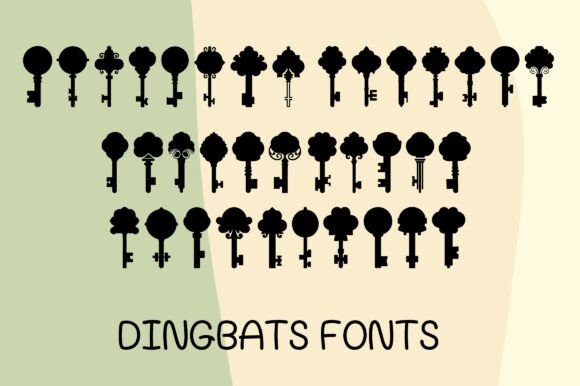
At its core, Molly is a collection of vintage key illustrations, but describing it merely as "drawings of keys" misses the nuance of its design. Each symbol in the Molly font family has been crafted with a distinct artistic flair. You won't find generic, clip-art style outlines here. Instead, the glyphs feature intricate floral-inspired tops, antique-inspired accents, and unique curves that evoke a sense of whimsy and history. The style leans heavily into a romantic, slightly gothic aesthetic, yet it retains a playful elegance that prevents it from feeling too dark or heavy. It captures the silhouette shapes of Victorian-era keys but renders them with a modern sensitivity to negative space and ornamental details. This creates a timeless look that bridges the gap between historical reference and contemporary design needs.
The Visual Appeal: Why Details Matter in Brand Identity
When building a brand identity, the small details often do the heavy lifting. A consumer might not consciously analyze the curvature of a logo or the specific style of an icon, but they certainly feel it. Molly excels in this area because it communicates specific values through its visual language: mystery, sophistication, and heritage. If you are working on a project that needs to convey a sense of "unlocking secrets" or "timeless value," these glyphs provide an immediate visual shorthand.
Consider the silhouette shapes of the keys in this collection. They are not uniform. Some feature heart-shaped bows with floral filigree, while others mimic the heavy ironwork of a rustic gate key. This variety allows for dynamic compositions. As a designer, you can use a single character from the Molly font as a standalone hero icon, or you can string several together to create a decorative border or a repeating pattern. Because the line work is balanced, these symbols scale well. Whether you are using them as a tiny watermark on a business card or blowing them up as a focal point for a poster, the integrity of the illustration holds. This versatility is crucial for maintaining professionalism across different media, from digital web design assets to high-resolution print projects.
Practical Applications: From Wedding Invitations to Packaging Design
The utility of a creative font like Molly lies in its application across diverse industries. It is a premium font asset that serves multiple sectors, particularly where emotional connection and aesthetic appeal are paramount.
Stationery, Invitations, and Editorial Design
The most natural fit for Molly is in the world of stationery and editorial design. For wedding invitations, the vintage key motif is a classic symbol of unity and new beginnings. Using Molly allows you to integrate these illustrations seamlessly into your typography layout without the hassle of aligning separate image files. It works beautifully for scrapbooking, greeting cards, and event programs. In publishing, particularly for book cover design, a single key glyph can serve as a powerful branding element for mystery novels, fantasy fiction, or historical memoirs. It creates an immediate genre expectation and draws the reader into the narrative before they read a single word of the synopsis.
Logo Design and Branding for Small Businesses
For entrepreneurs and small business owners, particularly those in the jewelry, antique, or boutique sectors, Molly offers a distinct advantage. If you are a jewelry brand, a key silhouette is a timeless motif. By utilizing this typeface, you can quickly generate logo concepts or packaging stamps. It is also highly effective for businesses that want to evoke a "gothic" or "steampunk" aesthetic. However, it is important to approach logo design with caution. While Molly provides excellent shapes, a strong logo often requires modification. I recommend using the glyph as a starting point—perhaps as a monogram container or a secondary mark—and ensuring it pairs well with your primary wordmark. A delicate serif font or a clean sans serif font usually pairs best, allowing the ornate details of the key to stand out without cluttering the visual hierarchy.
Digital Assets: Social Media and Web Design
In the fast-paced world of digital marketing, stopping the scroll is the primary objective. Molly can be a secret weapon for social media graphics. The ornamental details create high-contrast visual elements that break up text-heavy posts. For Instagram stories or Pinterest pins, using a large key glyph as a background texture or a divider element adds a layer of sophistication that standard stock photos cannot match. On websites, these symbols can be used as custom bullet points, section dividers, or loading icons, provided the site's theme aligns with the vintage aesthetic. This level of customization elevates the user experience and reinforces brand consistency.
Strategic Implementation: Evaluating Fit and Font Pairing
While Molly is visually striking, it is not a universal solution for all design problems. As a display font and a symbol font, it has specific strengths that must be leveraged correctly to avoid design pitfalls.
Readability and Hierarchy
It is vital to remember that Molly is a decorative dingbats font. It is not designed for body text. Attempting to write sentences with it will result in a string of key images, which is nonsensical for communication. Therefore, its role is strictly supportive and ornamental. When integrating Molly into your designs, use it to create focal points. It establishes the mood, while a highly legible body font—such as a modern sans serif or a classic serif font—handles the heavy lifting of information delivery. This contrast creates a strong visual hierarchy: the eye is drawn to the unique illustration first, then flows naturally into the readable text.
Evaluating Project Fit
Before committing to Molly for a project, evaluate the brand's core message. If the brand is hyper-modern, minimalist, or industrial (think tech startups or construction firms), the floral and antique nature of Molly might feel dissonant. However, for brands dealing in artisanal goods, storytelling, history, romance, or mystery, the fit is natural. It adds a layer of tactile warmth that digital designs often lack.
Font Pairing Strategies
Successful font pairing relies on contrast. Since Molly has high ornamental complexity, you should pair it with typefaces that are cleaner and simpler.
- With Serif Fonts: Pairing Molly with a transitional serif font (like Baskerville or Garamond) creates a classic, academic, and historical feel. This is excellent for book covers or high-end boutique branding.
- With Sans Serif Fonts: Pairing it with a geometric sans serif font (like Montserrat or Futura) creates a "modern vintage" look. The clean lines of the sans serif allow the intricate details of the key to pop, making the design feel curated and intentional rather than old-fashioned.
- With Script Fonts: Be careful here. If you pair Molly with a highly decorative script or handwritten font, the result can be chaotic. If you must use a script, choose one with smooth, flowing connections rather than scratchy, textured strokes.
Technical Considerations and Commercial Use
When incorporating Molly into your professional toolkit, it is essential to review the technical specifications and licensing. As a creative font, it is typically distributed as a commercial font, meaning you must adhere to the license agreement for the specific use case—whether that is for a client project, print-on-demand merchandise, or digital products.
Check the character map provided by the font foundry. High-quality dingbat fonts often include variations of the keys—some facing left, some right, some with different ornamental flourishes. Knowing exactly which characters are available allows you to design with precision. Furthermore, while these are vector-based outlines that scale infinitely, always test the rendering at your specific output size. A very small rendering on a mobile screen might lose some of the finer floral details, so you might need to use a bolder key variant for digital applications.
Ultimately, Molly is more than just a collection of shapes; it is a design asset that injects narrative into a project. It tells a story of hidden treasures, locked diaries, and secret gardens. For designers, marketers, and creators looking to move beyond generic icons and inject a sense of whimsical sophistication into their work, this typeface offers a practical, high-quality solution that balances vintage charm with versatile utility. By understanding its visual strengths and pairing it thoughtfully, you can unlock the full potential of your brand's visual identity.